Usability Tests
Qualitative Studies
Generative Studies
Quantitative Studies
Context
What is Rush Gaming Universe?
Rush Gaming Universe (RGU) was Hike's bet on bringing blockchain-based NFT gaming to India. In 2022, it was one of the very few Indian products attempting to bridge Web3 mechanics — NFTs, tokens, Play-to-Earn, decentralised ownership — with the gaming habits of a mass Indian audience, particularly Tier 2 and Tier 3 users.
The platform had 10 real-time multiplayer games. Players could compete in PvP matches and tournaments, join clans, climb leaderboards, and earn through gameplay.
The ambition was significant. The problem was that the people they were building for had no mental model for any of it.
I worked on 25+ projects at Hike. Most are under NDA. This case study covers the research I can share, the methods used, and the initiative I launched independently.
Product pillars
The Challenge
No mental models. No industry conventions. No playbook.
When I joined Hike's P2E pod in March 2022, blockchain gaming in India was genuinely new territory. There were no established UX conventions for explaining NFT ownership to a user who had never heard the term. No benchmarks for token comprehension among Tier 2/3 Indian gamers. The core question running through every study: can a user in Ranchi or Jaipur understand what they own, why it matters, and what they should do with it?
Research Programme
How the work was structured
Project lifecycle — consistent across all 25+ studies
What we were studying — 10 research domains across the 6-month programme
Edit Flow Research
How users navigate and edit features — identifying friction points in customisation flows
User Acceptance Testing
Pre-ship validation of new features — ensuring builds match intended behaviour before launch
Community & CX Insights
Aggregated signal from Discord, Telegram, and support channels — real-time sentiment at scale
Pre-Launch Concept Testing
Evaluating designs and concepts before build — catching comprehension failures early
Post-Launch Validation
Measuring feature adoption, comprehension gaps, and drop-off patterns after release
Quality of Understanding
Assessing how well users understood what a feature was and what it did for them
Issue Prioritisation
Understanding which friction points most urgently damaged trust, retention, or earnings
DAOs & Tokenomics
Exploring how Indian gamers conceptualised blockchain ownership, staking, and DAO participation
NFT Adoption Studies
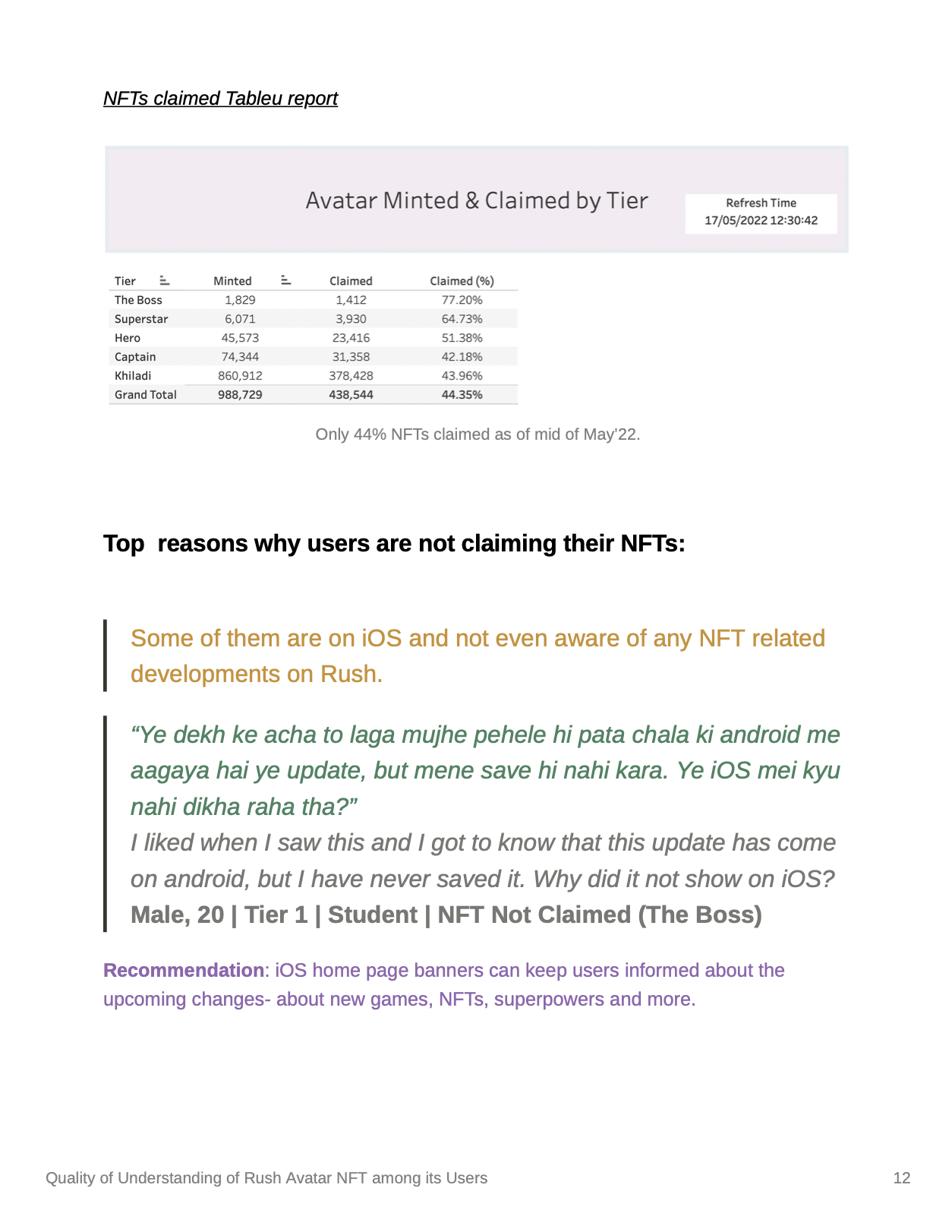
Longitudinal research into awareness, claim behaviour, and comprehension of NFT ownership
Competitive Intelligence
Secondary research benchmarking Winzo, Gamezy, and global Web3 products against RGU
Featured study · NFT Understanding
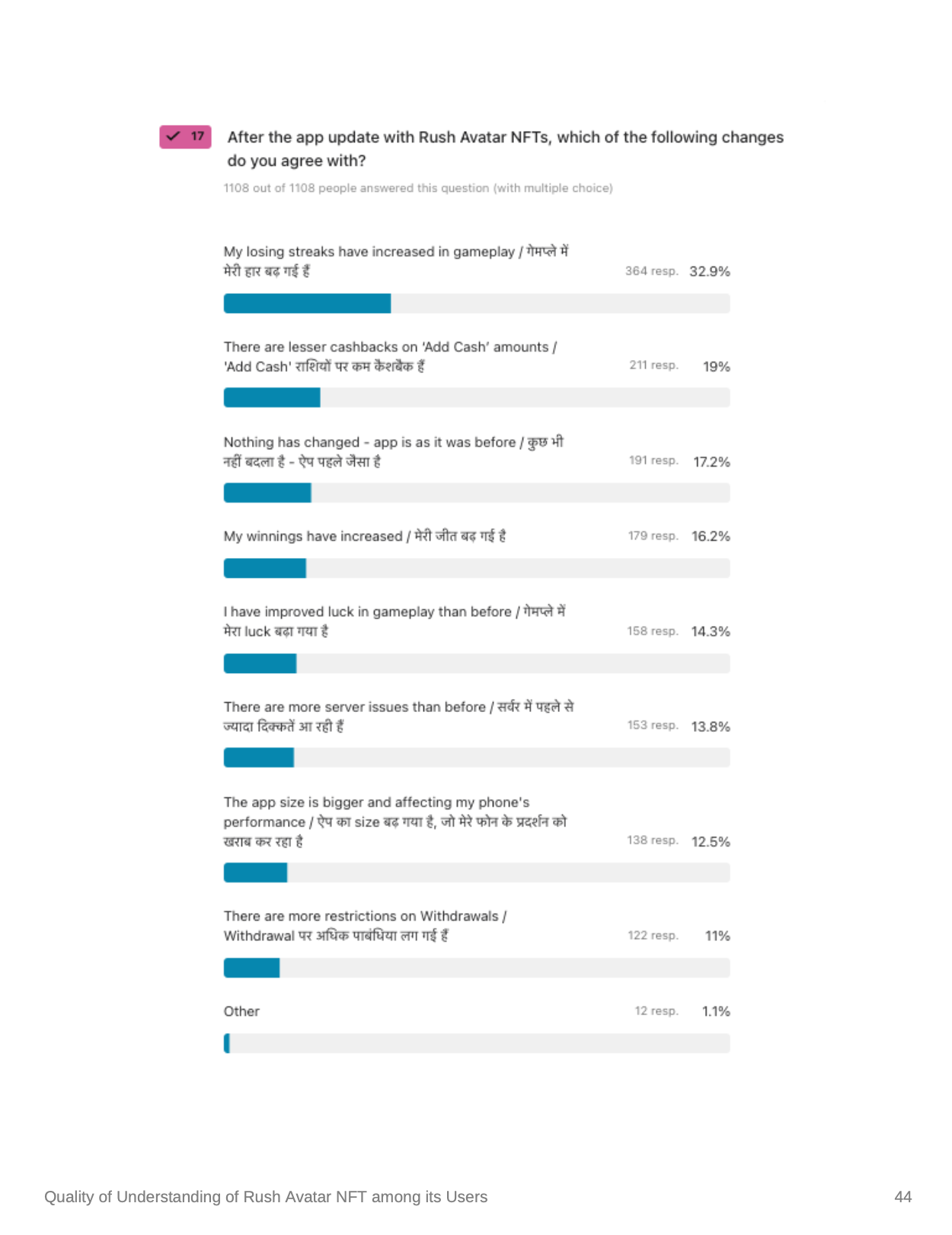
Quality of Understanding of the Rush Avatar NFT among its Users
Of users who said they didn't own a Rush Avatar NFT, cross-verification against platform data showed approximately 82% actually did own one. They just didn't know.
NFT tiers — what each one meant on the platform
Key Findings
Why NFT adoption was failing among Tier 2/3 Indian gamers
Global context · 2022
In 2022, global NFT trading volumes dropped ~97% from January 2022 peaks. Over 80% of NFTs sold for less than $200. Globally, existing NFT holders didn't understand what they owned, why it held value, or what they could do with it. RGU was building on this unstable foundation with an audience that had even less baseline context around blockchain mechanics.
Subscription, not ownership
Users mapped NFT to their VIP membership mental model — expected it to expire after 28 days and need recharging. Shared banner real estate and similar copy patterns reinforced this.
Editability disproved ownership
When users discovered the avatar could be customised, they concluded it couldn't be an NFT. In their logic, anything truly 'yours' on the blockchain shouldn't change.
Launch looked like a promo
The NFT launched with identical banner dimensions and copy register to every other feature promotion. Users processed it as a minor update, not a product-defining moment.
Every term failed individually
'1,999' was read as a year. 'Superpowers' confused with 'Superstar'. Earning figures beside tiers were read as monthly fees — a complete inversion of the value proposition.
Gold card mistaken as everyone's NFT
The Boss card's gold prominence caused users to claim it as their own NFT. The 'OWNED' tag on their actual lower-tier card was consistently missed without prompting.
Contract address = contact address
Every user in the study read 'Contract address' as a customer care number or home address field. The blockchain credentialling designed to prove ownership was creating confusion instead.
Superpowers were invisible at delivery
Benefits credited at month-end or limit exhaustion went unnoticed. Without in-session notification at the moment of earning, the superpower advantage never registered.
Avatar became a self-expression tool
Users invested deep emotional meaning in avatar customisation. Purchase intent for outfits was high across income levels. One user used it to express a body image she couldn't in public.
Audio-first audience
This user base learns via YouTube and voice content, not banners. NFTs sat outside the core transaction loop, so there was zero organic curiosity applied to learning about them.
A strategic question, not a fix list
The most important output: should users understand blockchain ownership, or just what the NFT does for them on Rush? That single question would determine every copy string and the entire literacy roadmap.
"VIP jese 28 din ke baad expire hota hai mujhe lagta hai NFT bhi aise hi expire kar jaega."
Just like VIP expires after 28 days, I think NFT will expire too.
— Male, 24 · Tier 3 · Student · NFT Claimed (Hero)
"Ye monthly pay karne padenge, zyada earnings hojaegi, boss ke liye 150, superstar ke liye 50."
I will have to pay monthly for this — Rs 150 for Boss, Rs 50 for Superstar.
— Male, 20 · Tier 1 · Student · NFT Not Claimed (The Boss)
Product Recommendations
Directional outputs from the NFT study
of 1,000+ surveyed claimed-NFT users recalled “looks more real now” — the top spontaneous recall. Core ownership comprehension remained low even among active users who had already claimed their NFT.
Dedicated ownership surface
A 'My NFT' profile tab with first-person language and a collapsible 'Proof of Ownership' section — blockchain detail accessible without leading the experience with hex addresses.
Stage-specific NFT communications
Different copy and triggers for each stage: Free User → Paid → NFT Claimed → Superpower Active → Superpower Maxed. Each stage has a different comprehension goal.
In-session superpower notification
Surface the earnings boost at the moment of winning, not at month-end. 'You earned ₹X extra with your Superpower this round' — makes the invisible benefit tangible.
Owned-tier-only Superpower view
Suppress tiers the user doesn't own on the Superpower screen. The current design of stacking all tiers with gold Boss at top consistently misled users into claiming the wrong NFT.
Audio-first awareness content
Deploy audio explanations within the app for key NFT moments. Build an insiders programme — identify power users who already create Rush content and equip them with accurate talking points.
Visual differentiation from VIP
NFT and VIP must live in completely different design systems: different colours, iconography, layout patterns, and copy register. Shared visual language was the root cause of the subscription mental model.
Additional directional recommendations around copy normalisation, banner placement, visual hierarchy, and navigation flows were also derived — these informed the product team's execution roadmap directly.
Featured Study · Token Adoption
$RUSH Token Waitlist — Usability Engineering
The opening problem
7 out of 8 participants had previously visited the $RUSH Token waitlist website. Every one of them had scrolled through the page. Not one had filled in the form to join the waitlist. Visible curiosity on the first visit; growing confusion and doubt on the second.
Token meant nothing
Users referenced movies, sweet shops, Metro cards. None had a mental model for blockchain tokens. The vocabulary gap was total.
'Early bird' backfired
For Tier 2/3 users with limited startup-culture exposure, 'early bird' read as suspicious — a reason for caution, not excitement.
NFT recall was nearly zero
Users who owned a Rush NFT couldn't locate it when asked. They hadn't absorbed the first floor — so selling the second floor was impossible.
The $RUSH Token experience had a foundational dependency problem. It couldn't succeed until the NFT awareness gap was addressed. You can't sell someone the second floor of a building they don't know they own.
Cross-Channel Research
Listening at scale — CX, Community & UXR together
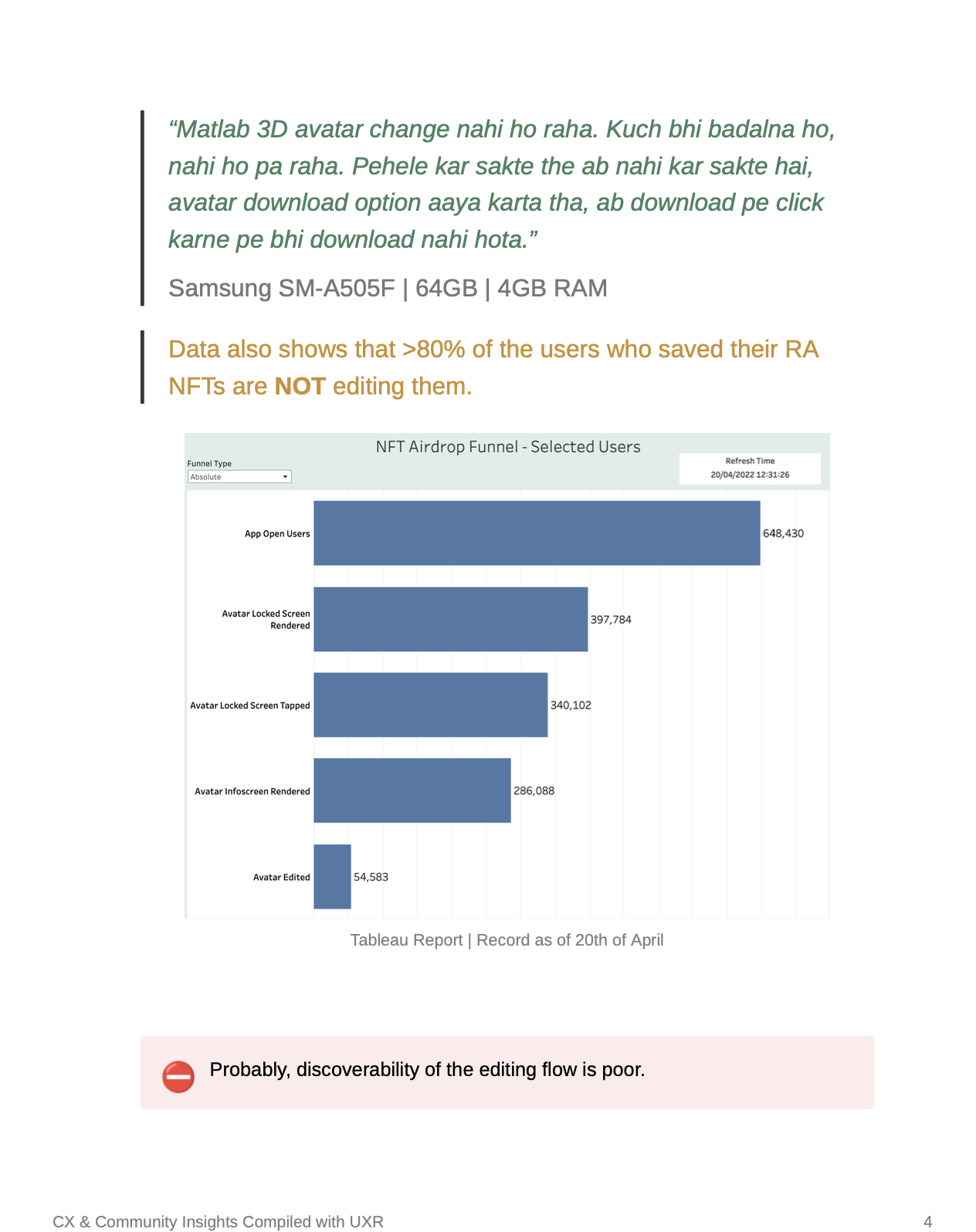
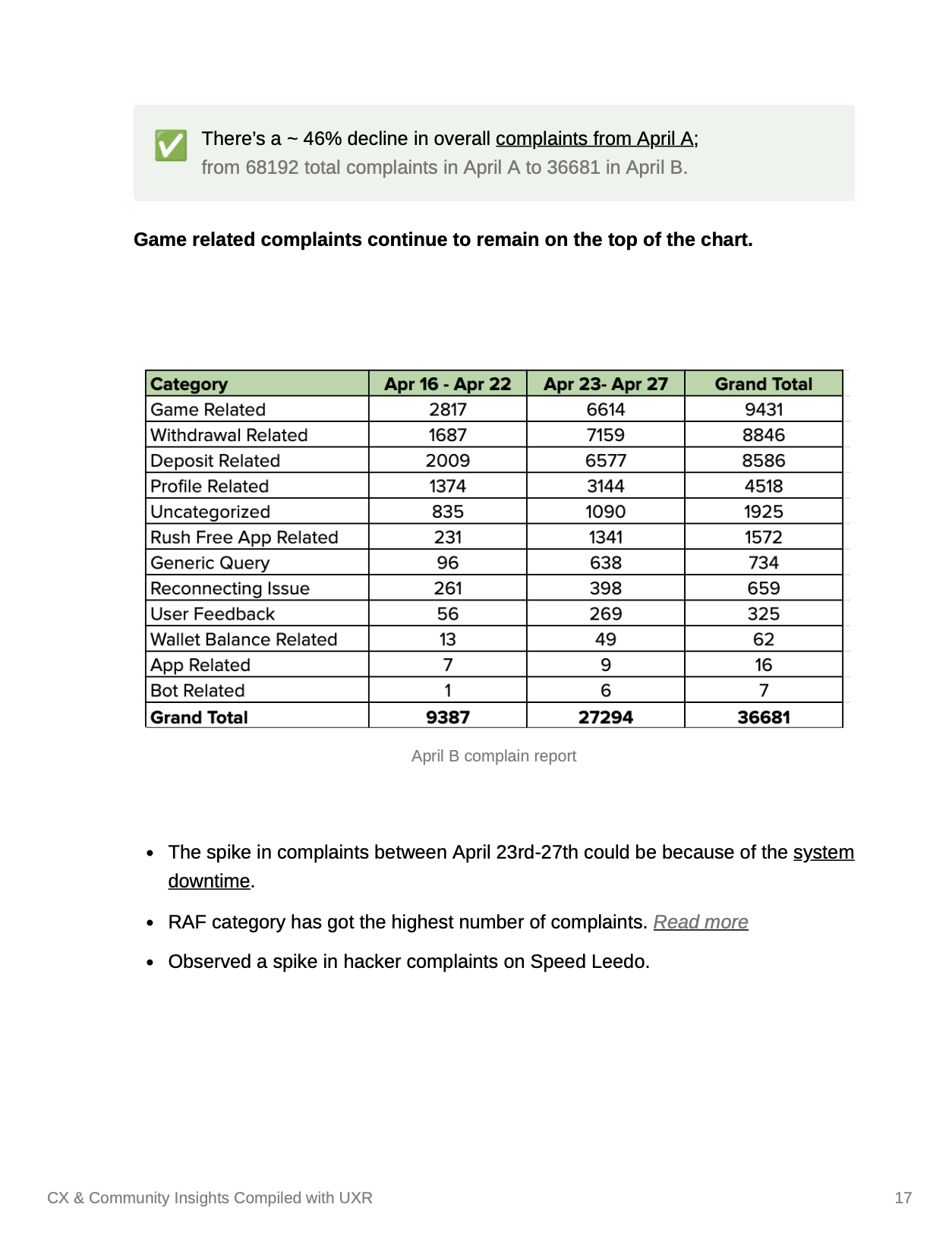
I initiated a bi-monthly compilation document that bridged CX support, community channels, and formal UXR findings into a single view. Ten editions total across March–July 2022. The goal: eliminate the tradeoff between real-time signal and analytical depth.
Platforms monitored
Sample period outcomes (fortnightly)
Top user requests surfaced and ranked for product backlog
Burning issues flagged to engineering with user evidence
NFT comprehension gaps cross-referenced with active UXR studies
Community wins captured and shared with growth and marketing
Self-Initiated
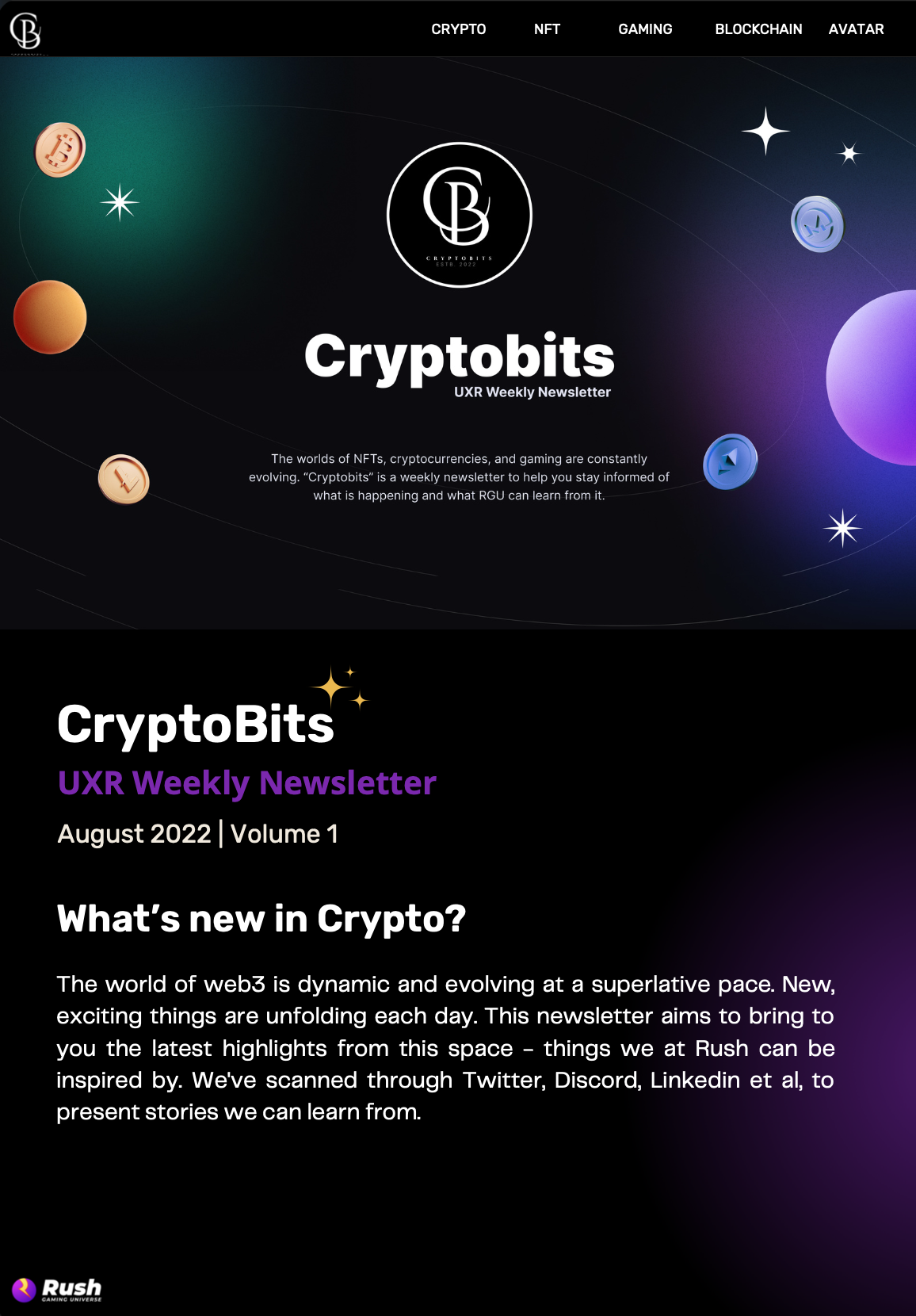
CryptoBits
Weekly UXR Newsletter · Aug–Sep 2022 · Self-initiated
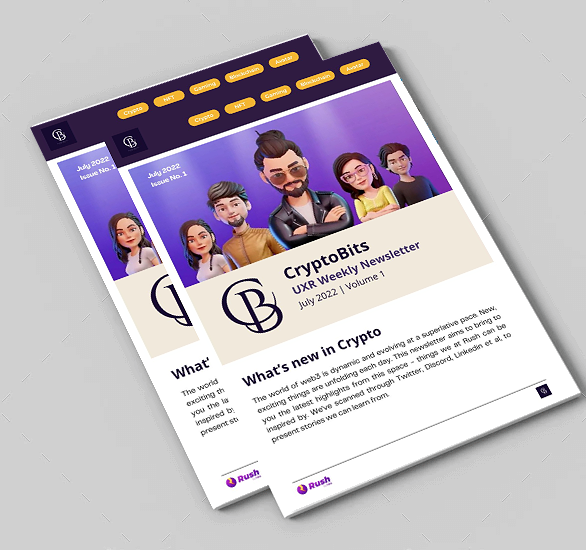
Midway through the internship, I launched CryptoBits — a weekly UXR newsletter I designed, researched, and wrote entirely independently. The Web3 space was moving fast and there was no structured mechanism for the team to stay informed about what was working elsewhere, specifically through a UX lens.
I scanned Twitter, Discord, and LinkedIn weekly to surface stories the team could act on — then translated each one into a product and UX insight, not a news item. Each edition covered one of these research areas:
Token Drops & Airdrop Mechanics
How global projects were reducing participation fear and driving token adoption
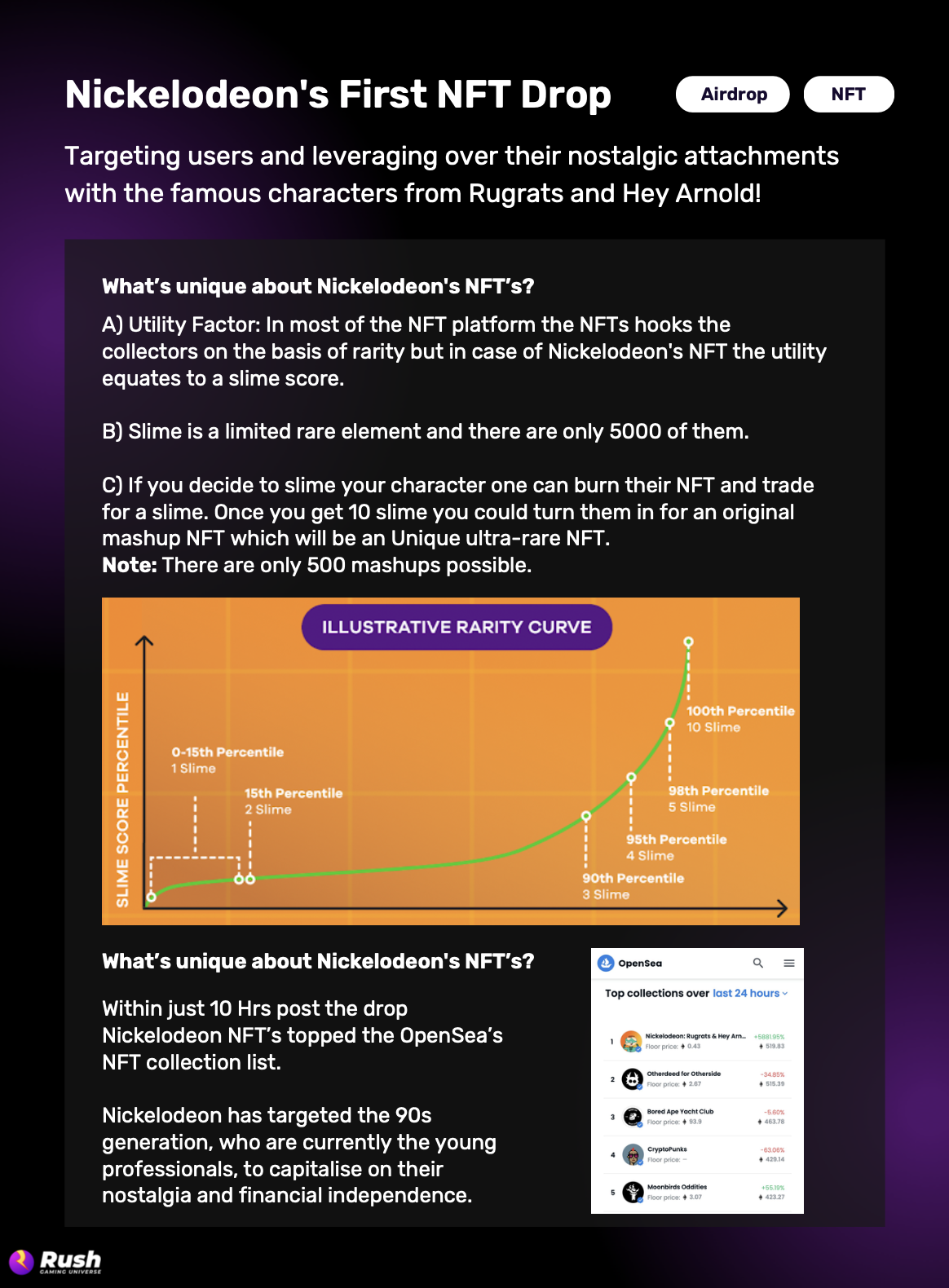
NFT Launch Strategies
What made NFT drops land — utility framing vs rarity framing, community mechanics, timing
Community Building Models
Discord/Telegram structures, power user programmes, creator incentive systems
Avatar & Digital Identity Design
How products like RTFKT were expanding what avatars could mean for users emotionally
Platform Trust Signals
Roadmaps, live stats, transparency mechanisms — what reduced user uncertainty at scale
Research Deliverables
Research Reports
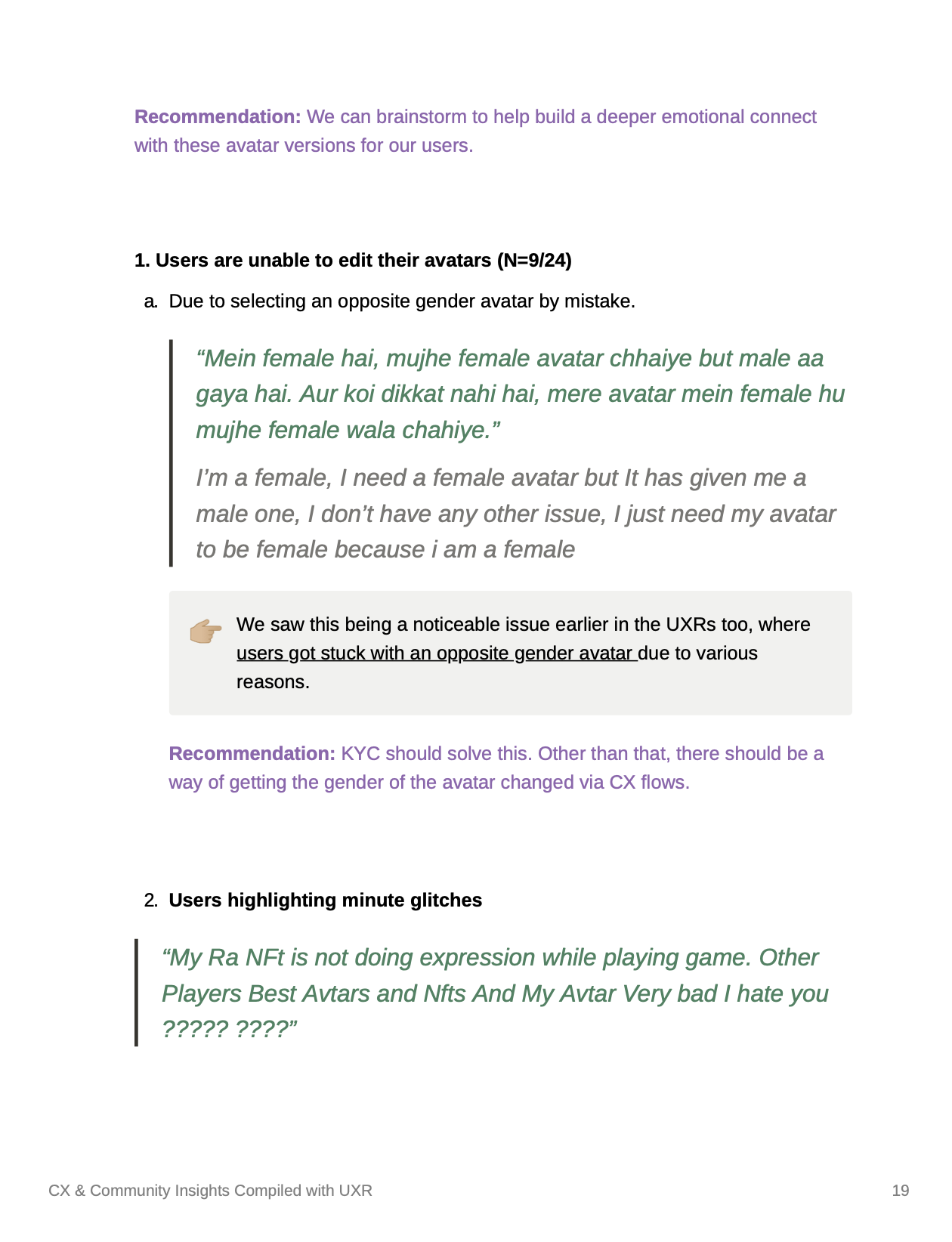
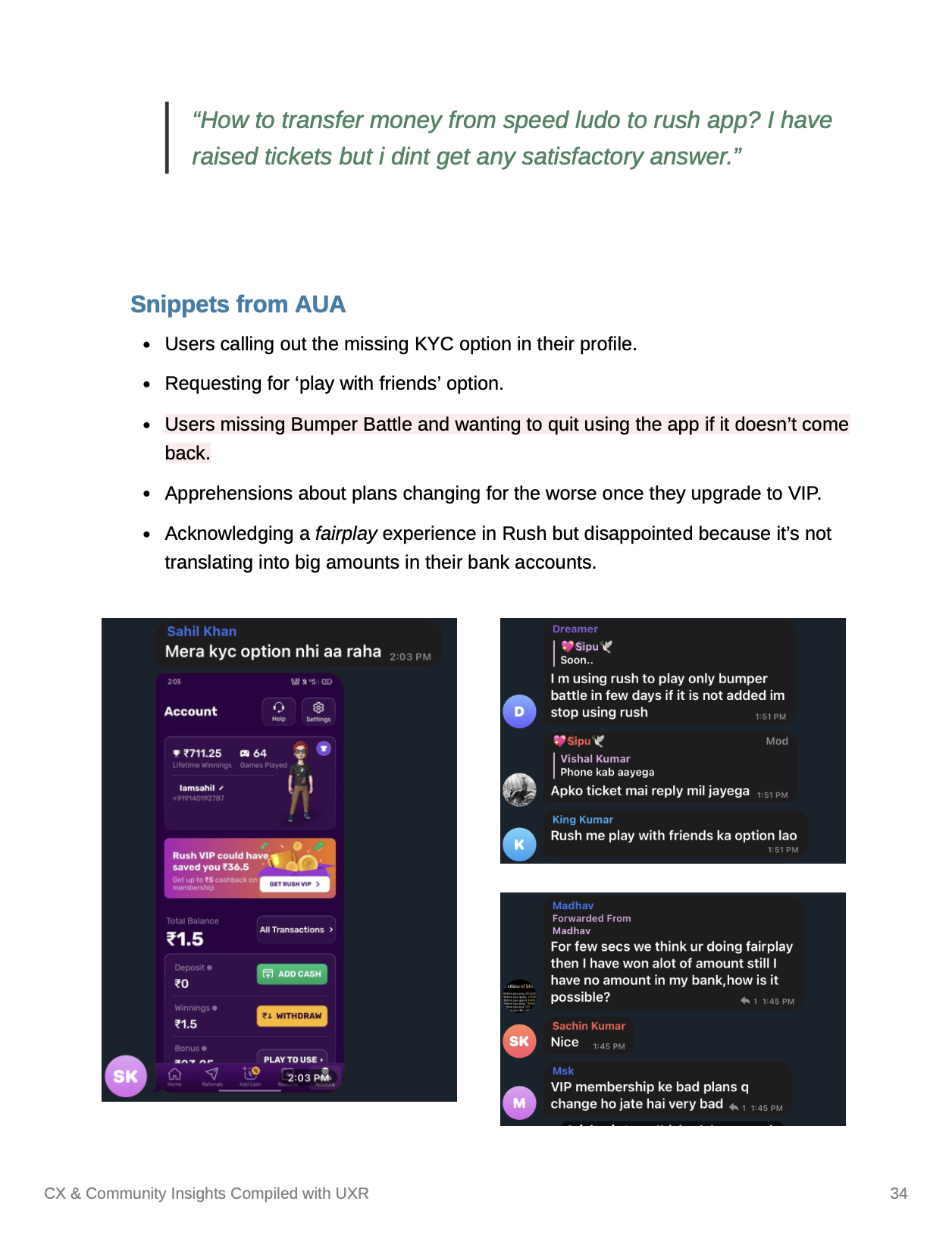
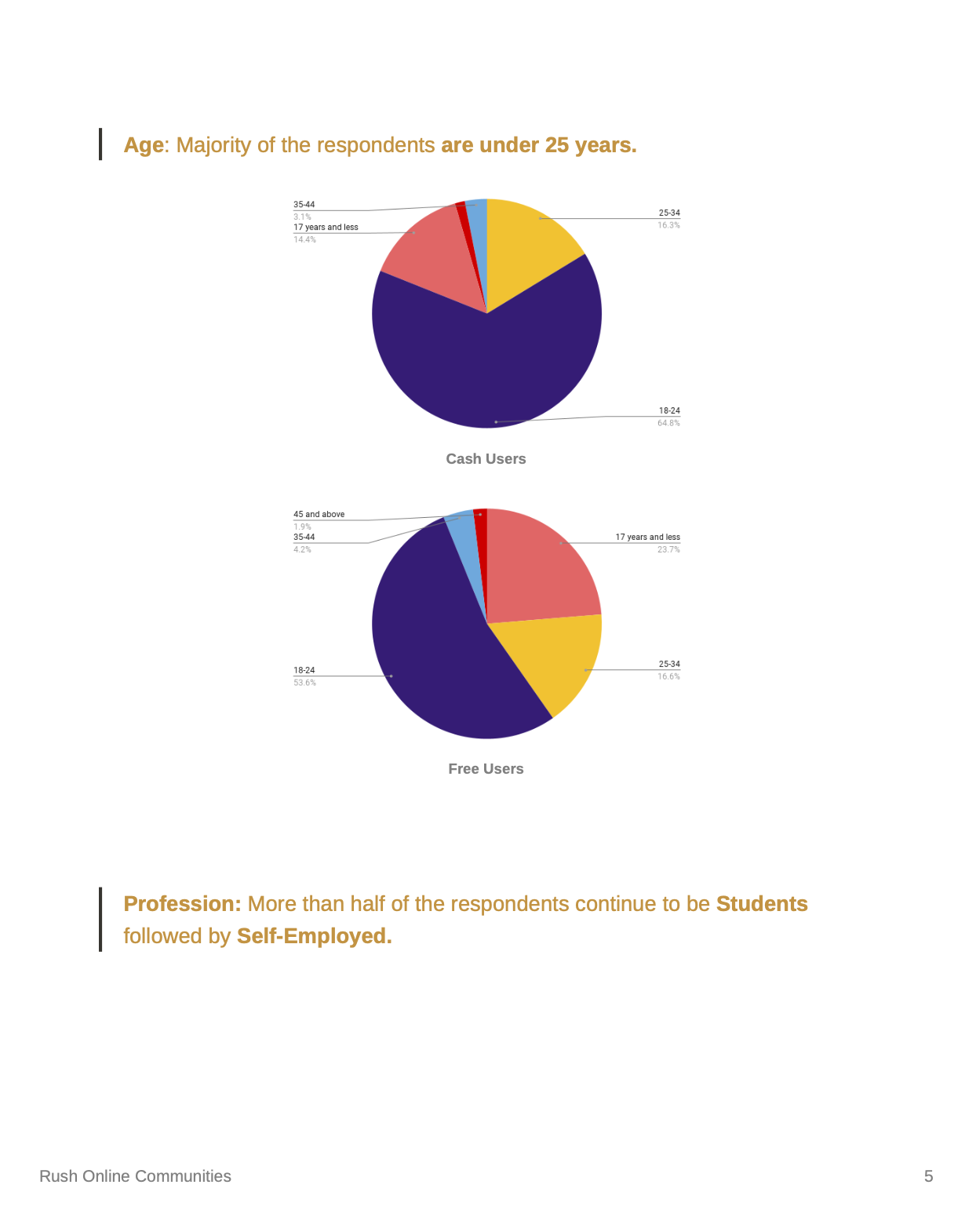
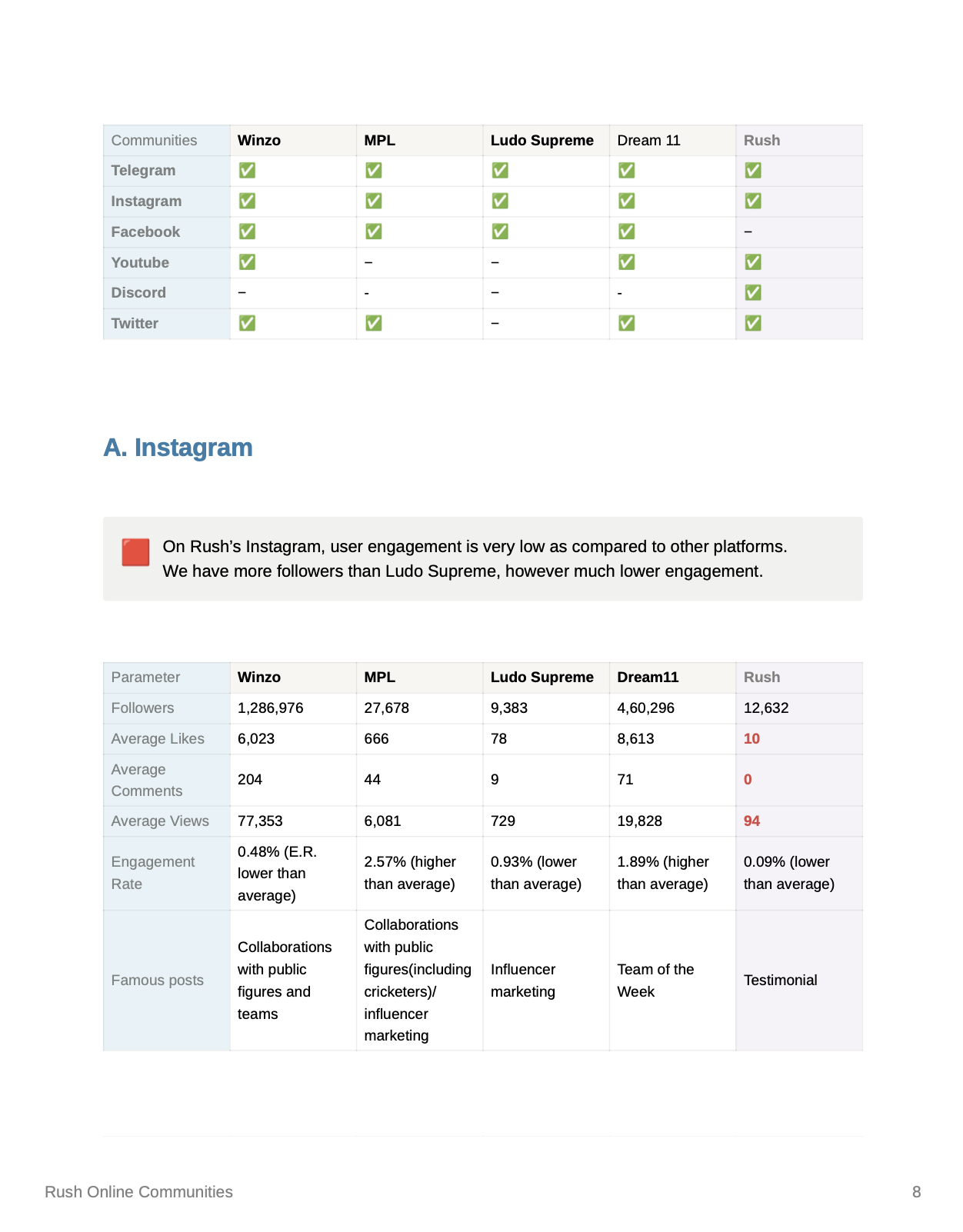
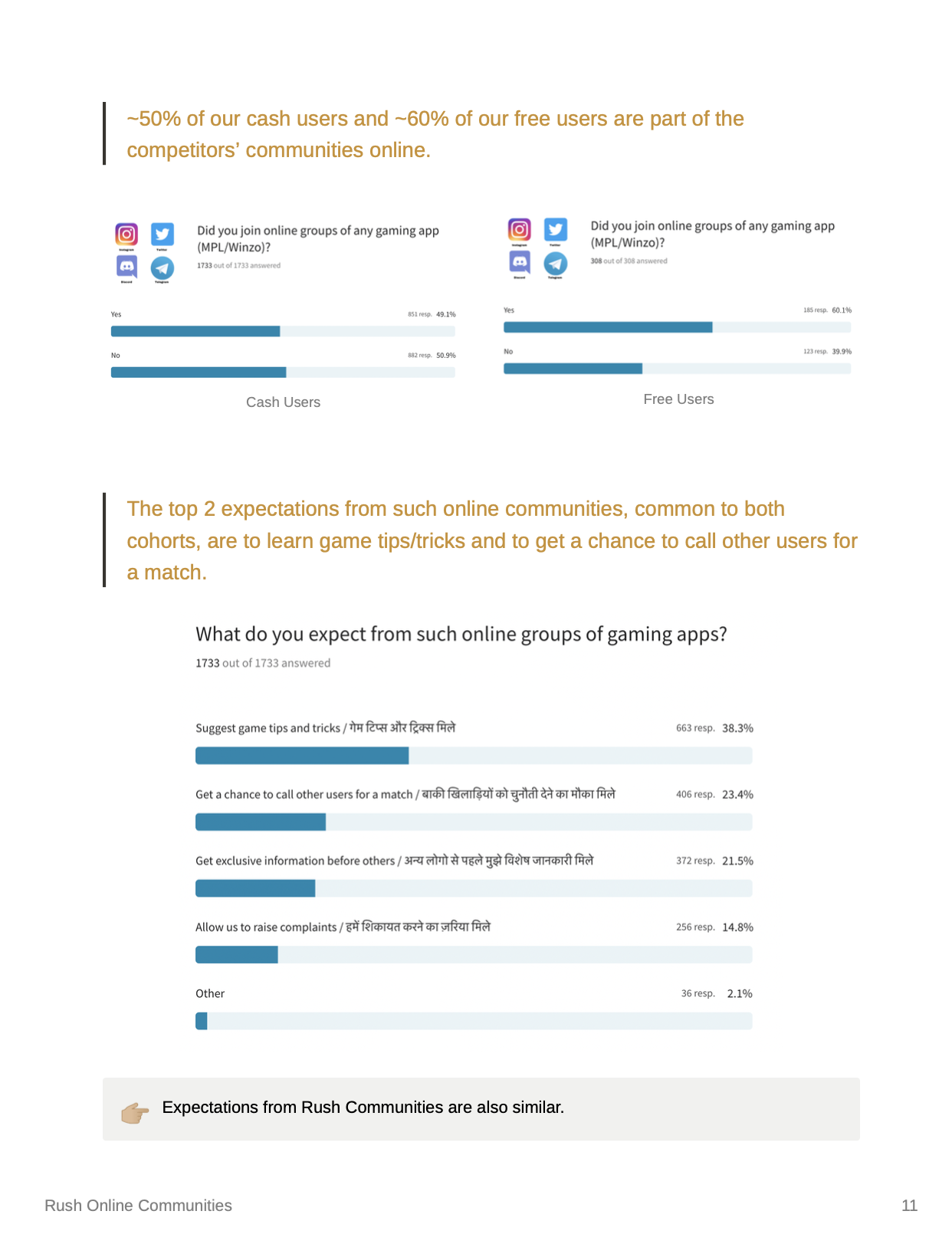
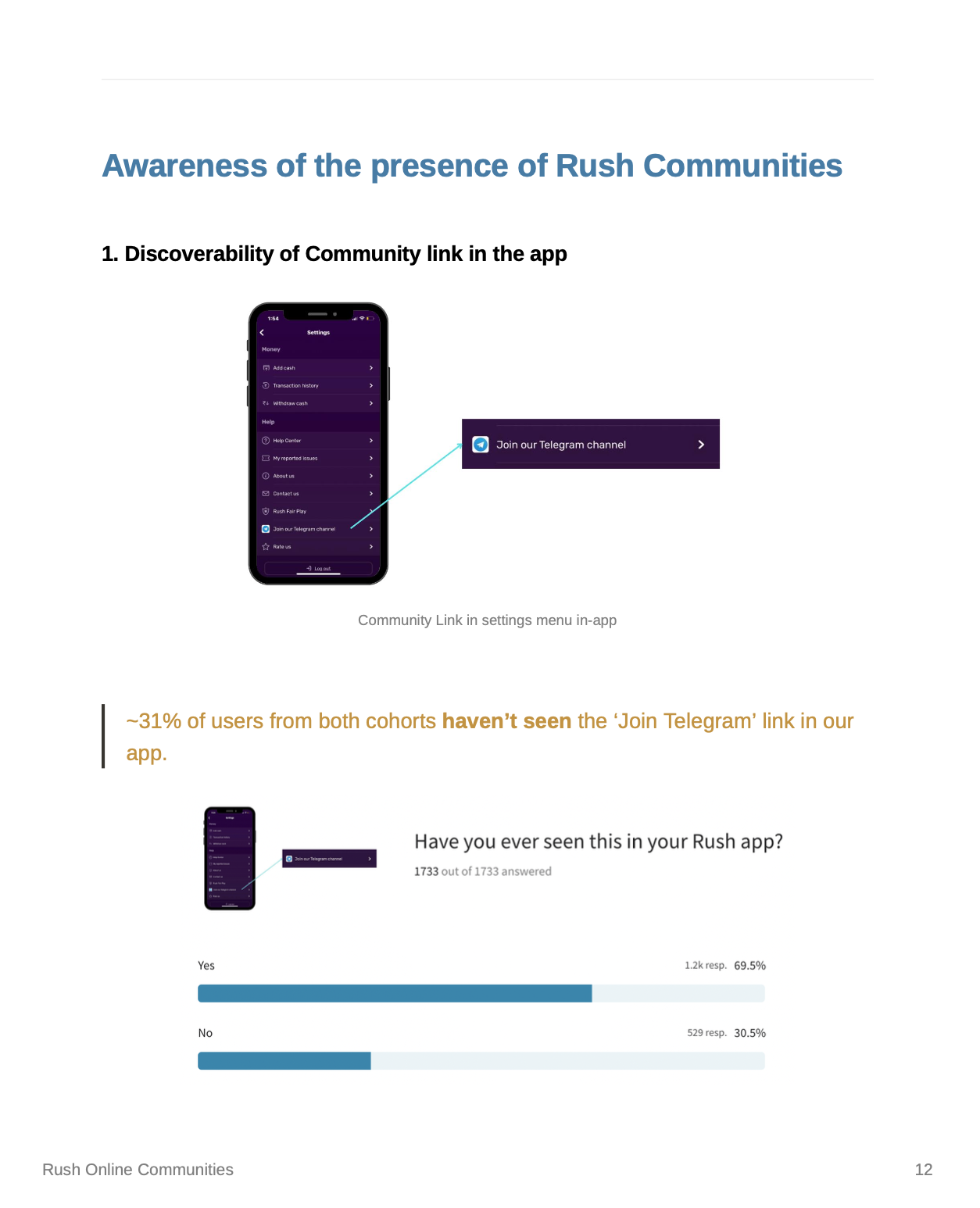
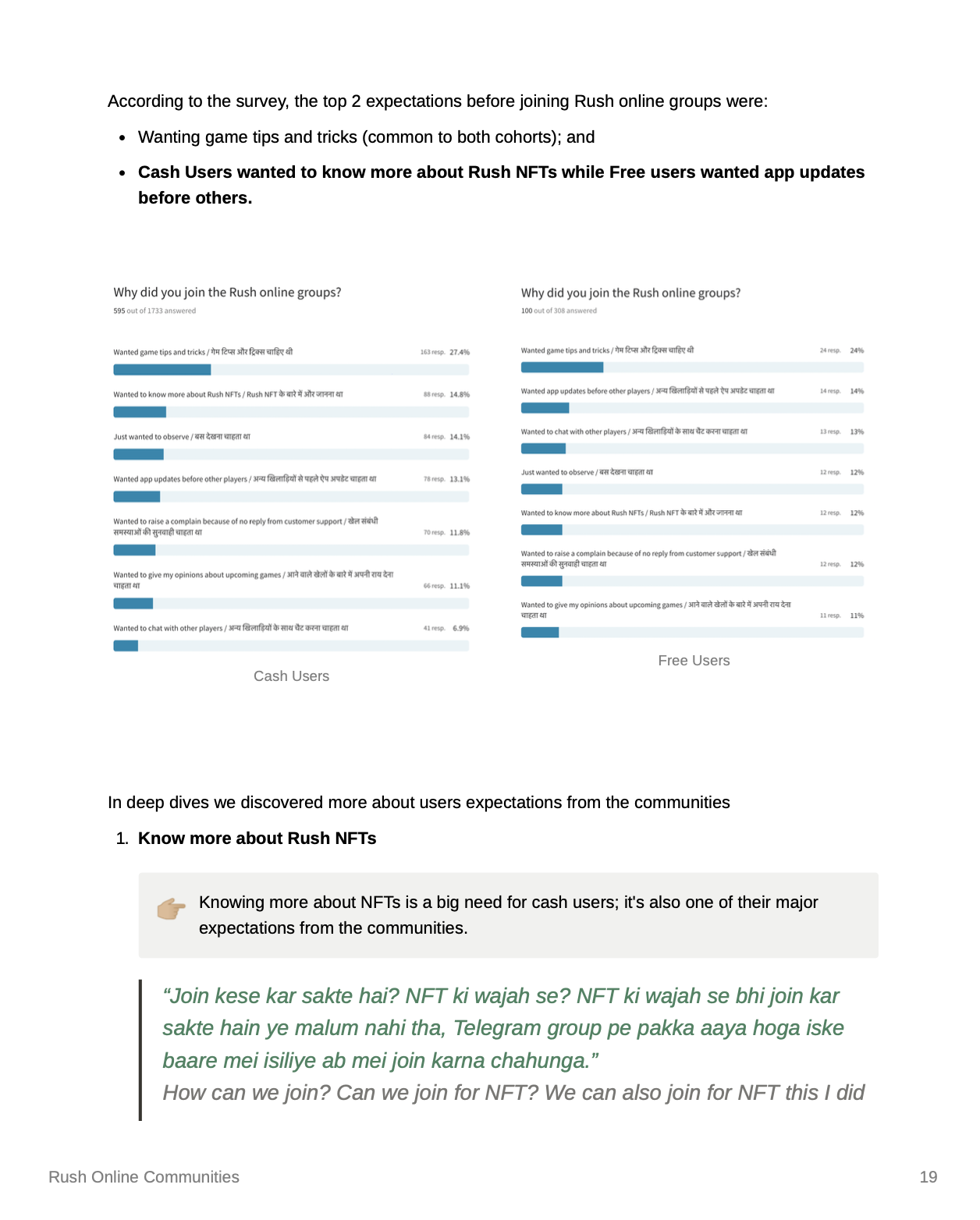
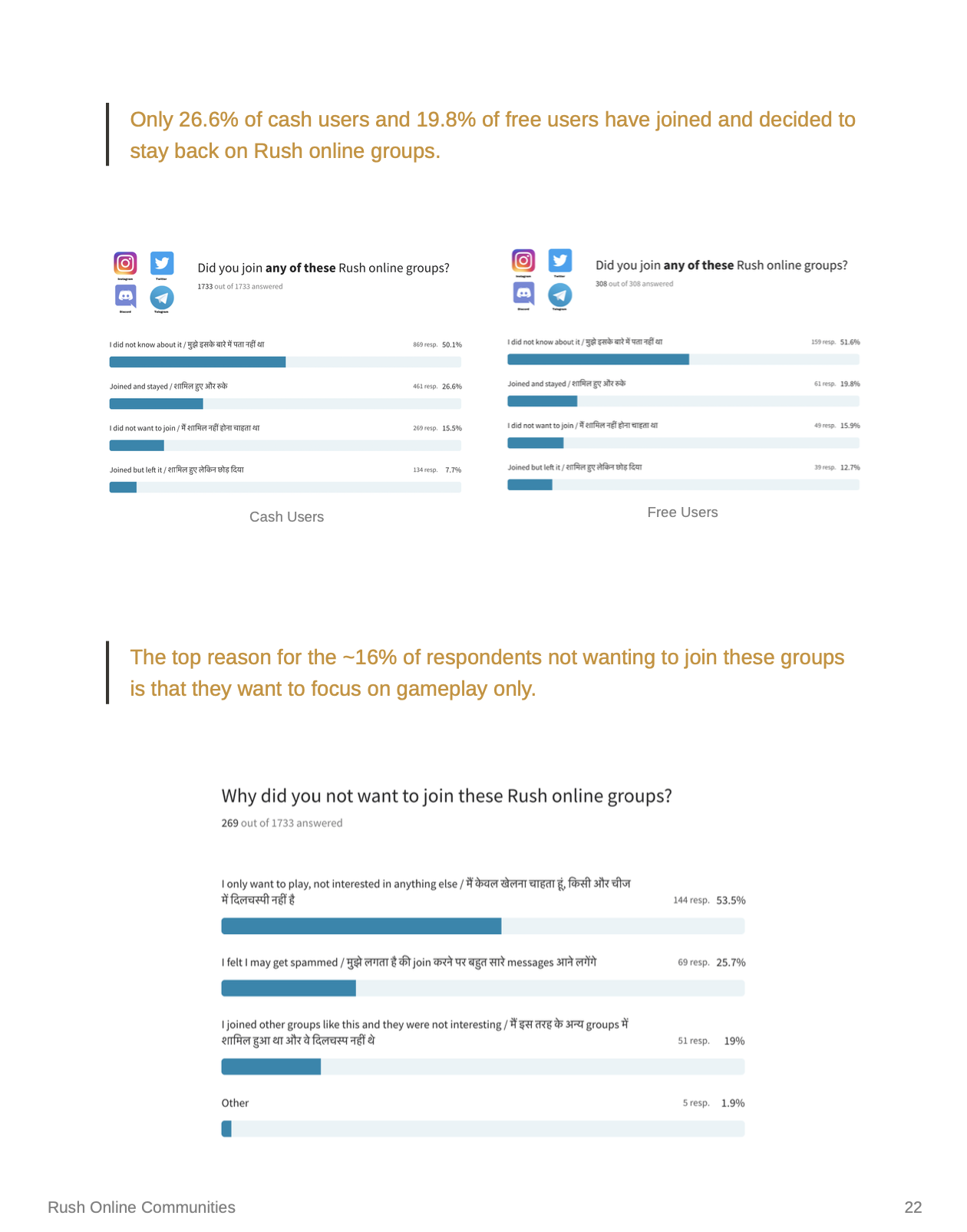
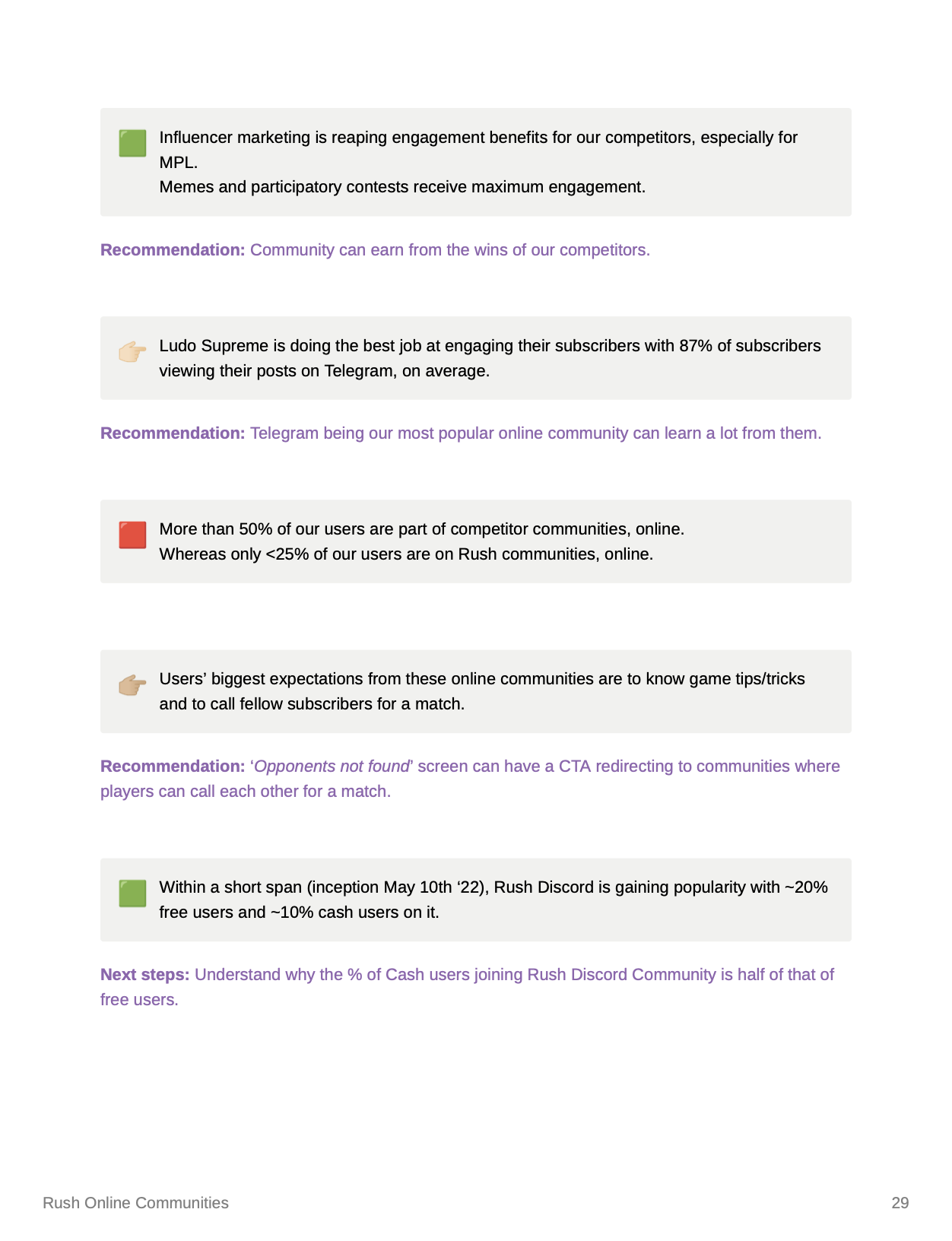
Every study concluded with a structured report — findings, implications, and directional recommendations — reviewed by a buddy and manager before stakeholder presentation. Shown below are representative report covers. Specific content is confidential.
Reflection
Almost all of my research experience before Hike had been in domains with established conventions. Web3 gaming for Tier 2 India in 2022 had none of that. We were establishing the conventions as we went.
The first thing this taught me: mental models are the actual product problem, not the feature problem. The ~82% awareness gap wasn't a marketing failure or a copy failure — it was a product architecture failure. The NFT had been built into the app without the cognitive scaffolding that would allow users to understand what it was.
The second thing: research at the frontier requires you to relinquish the comfort of benchmarks. When you're studying something nobody has studied before, you can't compare your findings to industry averages. You have to be willing to report what you find, even when what you find is that almost nobody understands the core value proposition of the product you're helping build. That's not a failure. That's the point.
Media